
Ambedkar Digital Learning & Skill-to-Job Centre — 36-Month Full-Cycle Adoption
Adopt one centre for a complete 36-month cycle — 3,000 community members reached, 480 youth trained in future-ready skills, and 288 placed or self-employed.
Need Assessment
Disadvantaged communities require more than short-duration training interventions. They need a permanent local institution that offers continuous access to digital learning, technical skills, career counselling, placement services and livelihood support.
Problem Statement
Youth frequently complete isolated training programmes without receiving continued mentoring, employer connections, portfolio development, interview preparation or post-placement support. This results in low employment conversion and weak job retention.
Solution Architecture
Under the three-year adoption model, one Ambedkar Digital Learning Skill-to-Job Center will operate as a long-term community employment hub. It will provide foundation learning, specialised skill tracks, industry exposure, placement services, alumni support and entrepreneurship assistance.
Key Activities
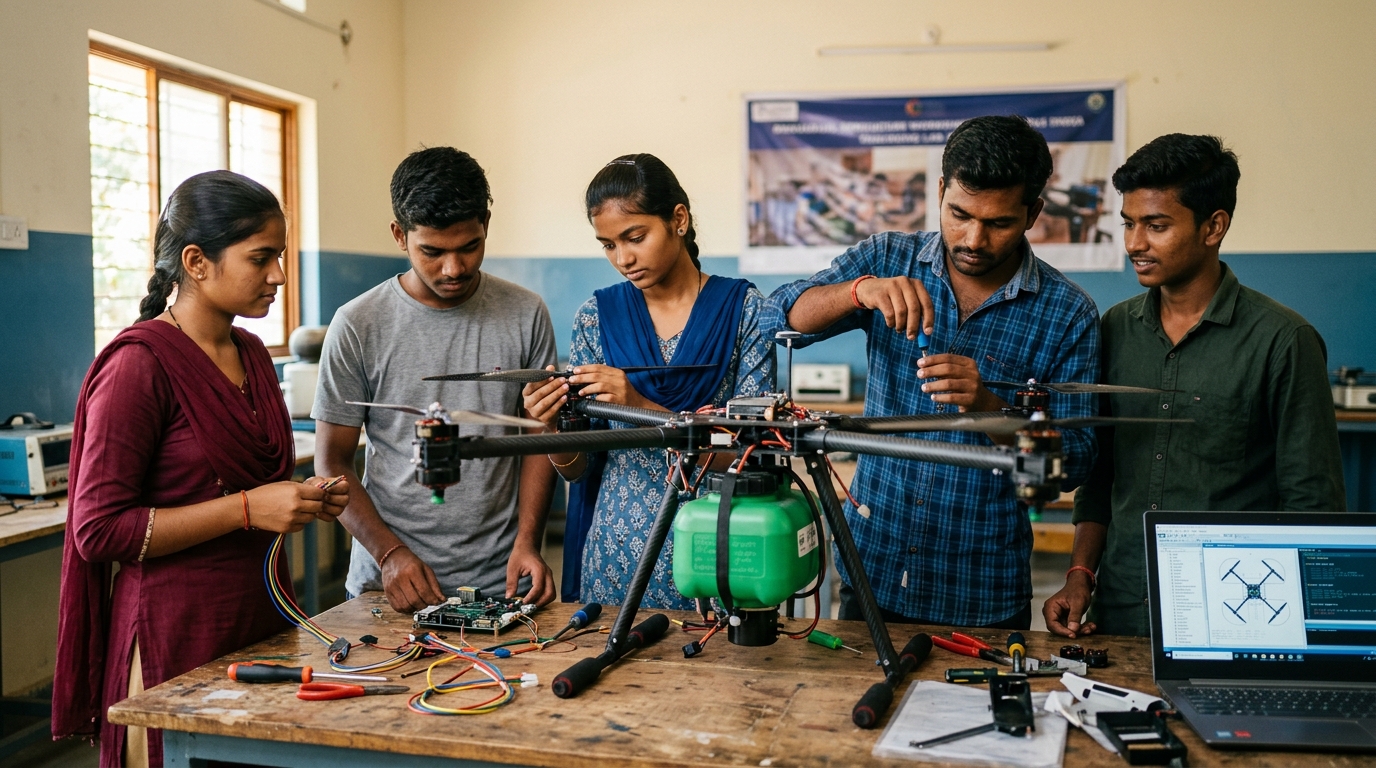
The center will offer digital literacy, AI tools, data and office skills, social-media marketing, video production, freelancing, drone building and maintenance, solar panel installation, EV charger installation and servicing, electronics, IoT, CCTV, housekeeping, facility management, hospital-support services, logistics, retail, BPO, e-commerce and women-focused livelihood programmes.
Expected Outcomes
At least 288 candidates will transition into employment, apprenticeships, self-employment or freelancing. The center will create a sustained community-level pipeline of skilled youth and improve access to emerging employment sectors.
Key Performance Indicators
Minimum 40% women participation, 80% completion rate, 75% certification rate, 60% livelihood conversion, quarterly employer engagement, 90-day placement retention and year-on-year improvement in beneficiary earnings.
Monitoring Framework
The center will use beneficiary-level MIS tracking, biometric or digital attendance, pre- and post-training assessments, placement verification and 30-, 60- and 90-day retention follow-up. Annual impact reviews will evaluate employment quality, income change and community reach.
Risk-Management Framework
Trainer attrition, curriculum obsolescence, equipment deterioration, placement volatility and beneficiary dropouts will be managed through refresher training, annual curriculum updates, equipment replacement reserves, diversified employer partnerships and structured counselling.
Sustainability Plan
The three-year period will be used to build a stable employer network, local institutional partnerships, alumni engagement and government convergence. Advanced courses, employer-sponsored batches, apprenticeship partnerships and affordable services for non-priority beneficiaries can support a portion of future operating costs.
Planned Outputs
- One center operational for 36 months
- 3,000 digital-literacy beneficiaries
- 480 youth completing job-linked training
- Regular employer interactions, job fairs and certification drives
- Alumni and entrepreneurship-support network
The DPR includes the concept note, need assessment, activities, budget, monitoring framework and reporting schedule. Other deliverables are published quarterly by the Trust's compliance team.
 by
by