

Ambedkar Digital Skill-to-Job Programme — District Cluster (3 Centres)
A cluster of three centres within one district — 9,000 community members reached, 1,440 youth trained, and 864 placed or self-employed over 36 months.
Need Assessment
A single center cannot adequately serve geographically dispersed settlements across an entire district. Youth in remote mandals, rural habitations and urban-poor communities require locally accessible training combined with district-level employer coordination.
Problem Statement
Skill-development opportunities are concentrated in cities, while employment demand and vulnerable populations are spread across the district. Training programmes often operate independently without shared quality standards, specialised laboratories or coordinated placement systems.
Solution Architecture
The district-cluster model will establish three Ambedkar Digital Learning Skill-to-Job Centers linked through a common district management, monitoring and placement structure. Centers may specialise according to local economic opportunities while sharing trainers, mobile laboratories and employer relationships.
Key Activities
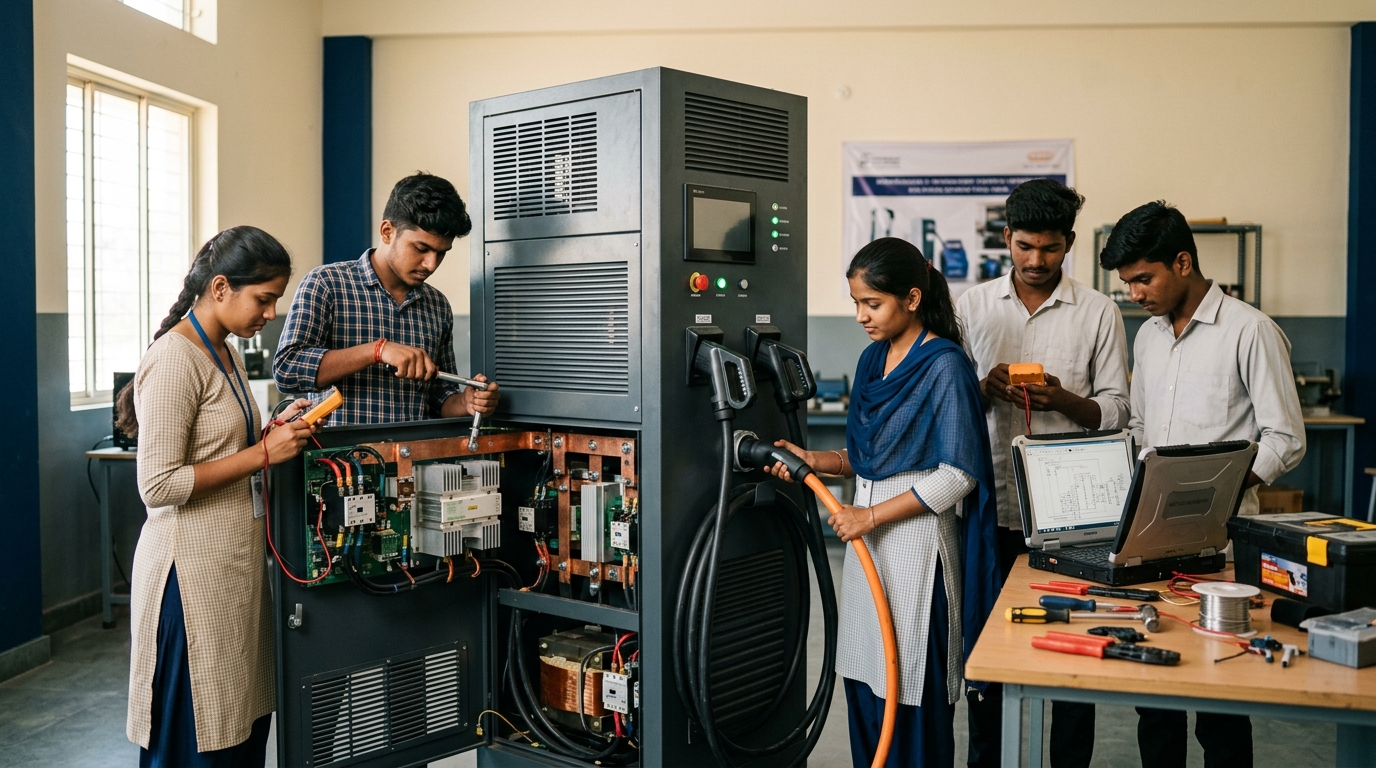
Activities will include community mobilisation, digital literacy, AI and digital-skills training, drone assembly, solar and EV-charging skills, housekeeping and facility management, electronics, healthcare support, retail, logistics, office administration, BPO, e-commerce, freelancing, entrepreneurship and district-level job fairs.
Expected Outcomes
At least 864 candidates will enter employment, self-employment, apprenticeships or freelance work. The cluster will improve district-wide training access, reduce travel barriers and create a coordinated local skill-to-employment ecosystem.
Key Performance Indicators
Three centers launched as scheduled, minimum 40% women participation, 80% completion, 75% certification, 60% livelihood conversion, employer partnerships across major district sectors and verified 90-day retention.
Monitoring Framework
Each center will report through a central district MIS. Monthly center scorecards will assess enrolment, attendance, training quality, placement and financial utilisation. Quarterly cluster reviews will compare performance and initiate corrective action.
Risk-Management Framework
Uneven center performance, trainer shortages, weak rural mobilisation, employer concentration and equipment duplication will be mitigated through shared trainers, mobile technical labs, common procurement, district-level mobilisation planning and diversified placement partnerships.
Sustainability Plan
The district cluster will be integrated with colleges, ITIs, industries, SHGs, local bodies and government skill programmes. Employer-sponsored training, apprenticeships, shared infrastructure and phased CSR adoption will support continuity beyond the initial funding period.
Planned Outputs
- Three operational centers
- 9,000 digital-literacy beneficiaries
- 1,440 youth trained
- District employer database and placement cell
- Shared advanced technical-training facilities
- Periodic job fairs, industry visits and apprenticeship drives
The DPR includes the concept note, need assessment, activities, budget, monitoring framework and reporting schedule. Other deliverables are published quarterly by the Trust's compliance team.
 by
by